Category Archives: Uncategorized
Nepal’s Path to Economic Sovereignty: Harnessing Minerals and Science

Kathmandu, October 15, 2023
Nepal stands at a critical juncture in its developmental trajectory, with experts urging the government to prioritize investments in scientific research and strategic utilization of its mineral wealth to transition from a remittance-dependent economy to a self-reliant, economically robust nation. Economists and scientists alike argue that leveraging Nepal’s untapped mineral resources, coupled with advancements in research and technology, could catalyze industrial growth, foster innovation, and position the country as a key player in the global economy.
Untapped Mineral Wealth: A Foundation for Growth
Nestled in the Himalayas, Nepal boasts significant deposits of limestone, iron ore, copper, cobalt, and rare earth elements—minerals essential for manufacturing electronics, renewable energy systems, and infrastructure. Additionally, gemstones like tourmaline and aquamarine offer niche market opportunities. However, the sector remains underdeveloped due to limited infrastructure, outdated extraction techniques, and reliance on exporting raw materials.
Exporting unprocessed minerals yields minimal returns.Value addition through domestic processing could multiply revenue, create jobs, and reduce import dependencies. For instance, refining rare earth elements locally could supply global tech industries, while processing limestone into cement might fuel a construction boom.
Science and Innovation: Catalysts for Transformation
Investing in research and development (R&D) is pivotal to unlocking this potential. Establishing institutions focused on mineralogy, metallurgy, and sustainable mining practices would enable Nepal to build technical expertise. Collaboration with international partners could accelerate knowledge transfer, while universities must integrate STEM education to cultivate a skilled workforce.
Renewable energy technology presents another avenue. With abundant hydropower resources, Nepal could lead in green energy solutions, powering mineral processing plants sustainably. Agricultural R&D could also enhance food security, aligning with broader economic goals.
Economic Diversification: Reducing Reliance on Remittances
Remittances, constituting over 20% of Nepal’s GDP, highlight economic vulnerability. By contrast, a robust minerals sector could diversify revenue streams, attract foreign investment, and spur ancillary industries. South Korea’s transformation through tech innovation and Norway’s sovereign wealth fund model, built on resource revenue, offer blueprints for success.
Economic sovereignty requires moving up the value chain.Nepal must shift from raw exports to high-value products, fostering self-sufficiency.
Challenges and the Road Ahead
Funding constraints, political instability, and infrastructural deficits pose significant hurdles. Moreover, sustainable practices are non-negotiable to prevent environmental degradation. Experts advocate for public-private partnerships, policy reforms, and transparent governance to mitigate risks.
Strategic planning and long-term vision are essential. Prioritising R&D and responsible resource management will ensure equitable growth.
Conclusion: A Call to Action
Nepal’s journey toward economic power hinges on bold investments in science and its mineral heritage. By fostering innovation, building infrastructure, and enforcing ethical practices, the nation can transcend its current limitations. The government, private sector, and international community must collaborate to turn this vision into reality—ensuring Nepal emerges not just as a resource-rich nation, but as a beacon of sustainable prosperity.
As global demand for critical minerals surges, Nepal’s moment to ascend the economic ladder is now. The stakes are high, but the rewards—a self-reliant, thriving economy—are within reach.
Siraichuli-Two day Trek

During a two-day trek to Siraichuli, the highest peak in Chitwan District, I embarked on a journey that would etch itself into my memory forever. I was accompanied by my close friends and brothers from Capital Engineering Firm—Chandra, Rahul, Amul, and Diwash. Together, we set out from Saktikhor, walking through the dense jungle that stretched ahead of us, filled with both adventure and mystery.
The path wound through quiet forests and villages, as we climbed higher toward our destination. Lush greenery surrounded us, with each step bringing us closer to the tranquility of the hills and further away from the hustle of daily life. We spent our first night at Chaukidada, resting under the starry sky. As the night grew darker, the camaraderie deepened, laughter and stories bouncing off the quiet hills. There was something magical in the simplicity of it all—just us, the mountains, and the crackling warmth of shared memories.
The next morning, we resumed our trek with renewed energy, our sights set on the summit of Siraichuli. The higher we climbed, the more breathtaking the views became. Snow-capped peaks like Gausankhar, Dhaulagiri, Langtang, Rolwaling, and Manaslu stood proudly in the distance, while the expansive Terai belt stretched out below us like an endless green ocean. It felt as if the entire world had paused just for us, offering a silent blessing from the mountains.
Upon reaching the top, we prayed to the goddess, a moment that filled me with a profound sense of peace and gratitude. The trek had been challenging, but the reward was worth every step. Standing there, surrounded by friends and the beauty of nature, I felt deeply connected to the world around me.
We descended to HattiBang for lunch, where we enjoyed a simple yet hearty meal. The villagers welcomed us with warm smiles, and we exchanged stories with those we met along the way. Their lives were lived with minimal resources, yet they exuded a happiness that was contagious. The children played with nothing more than sticks and stones, but their laughter echoed through the hills, reminding us that joy often comes from the simplest things.
As we made our way back to Saktikhor and eventually home, I couldn’t help but reflect on the experience. The trek had been more than just a physical journey—it was a reminder that life can be beautiful even with limited resources and opportunities. It’s all about perspective, about finding happiness in the present moment and appreciating the little things.
We captured countless pictures and videos, preserving these moments in time, but it was the interactions and memories we made with the people of those villages that would stay with me the longest. In the end, it was a wholesome, heartwarming trek—a journey that not only brought me closer to nature but also to the understanding that life, in its purest form, is a gift to be cherished.
The FABRIC OF TIME | BOOK I OF THE EVEREST SAGA
Chapter 1: Into the Frozen Frontier
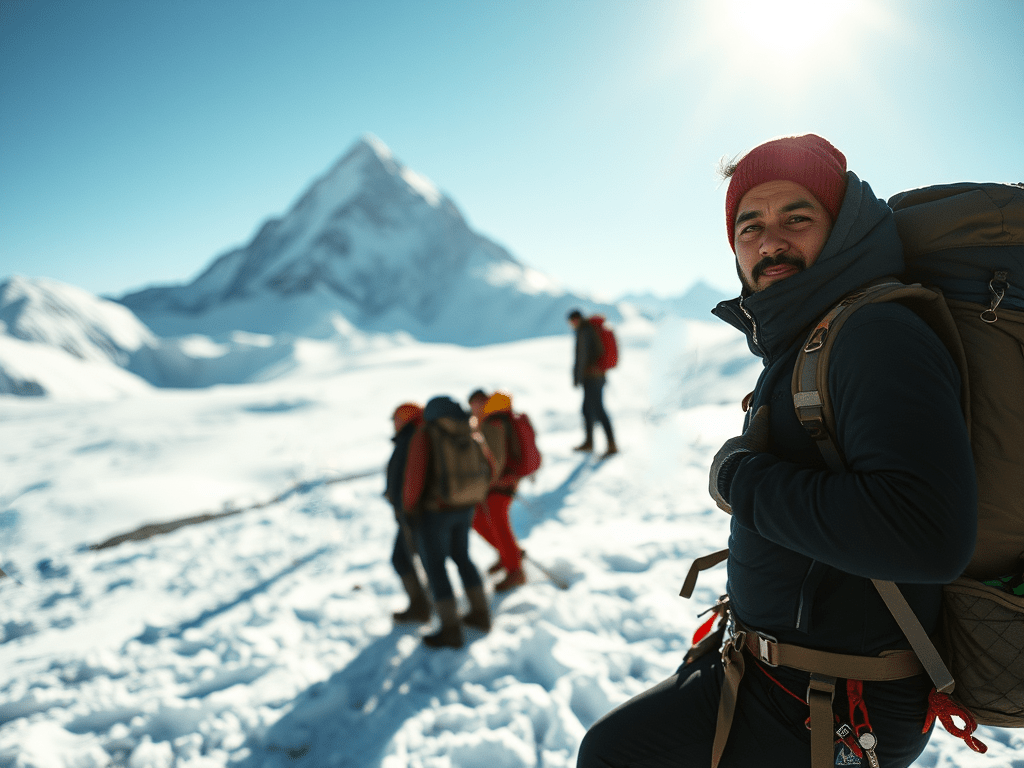
The bitter cold wrapped around Sandesh Ghimire like a second skin, seeping through the layers of his thermal gear despite their promises of protection. He adjusted the strap of his backpack and squinted up at the towering mass of Mount Everest in the distance, its jagged peak cutting into the sky like a frozen sentinel. The mountain was both breathtaking and ominous, its sheer size a reminder of nature’s indifference to human ambition. Despite the thrill of the expedition, there was a weight of responsibility on Sandesh’s shoulders that grew heavier with each step they took into the unforgiving terrain.
“How are we looking up there, Carlos?” Sandesh called out, his breath forming clouds in the frigid air as he glanced at the figure leading the group.
Carlos, a tall, wiry man with sun-bleached hair sticking out from beneath his snow cap, turned and flashed his usual toothy grin. “All clear, boss,” he shouted back, his voice carrying easily in the thin air. “Just another hour or so till we reach the site.”
Sandesh smiled, appreciating Carlos’ upbeat demeanor. The Brazilian climate science graduate had become the unofficial morale officer of the group, his jokes and casual attitude a constant source of energy. Even now, with the wind biting at his face and the icy landscape stretching endlessly before them, Carlos found reasons to smile. Sandesh envied that. As the leader of this international research team, the burden of their safety weighed more heavily on him than the subzero temperatures.
Behind Carlos, the rest of the group moved slowly but steadily. Emma, the environmental science student from the UK, was chatting with Linh, the soft-spoken Vietnamese geologist, her bright red jacket making her easy to spot in the sea of white snow. Emma’s high-pitched laugh echoed off the mountainside, a stark contrast to Linh’s more reserved responses. Sandesh admired how they had grown close over the course of the expedition, their shared excitement for the research creating an unspoken bond.
Priya, an Indian researcher specializing in ice core data, trudged alongside James, a Chinese paleontologist with sharp, calculating eyes. Priya’s thick, dark curls were tucked beneath a woolen hat, and her face was flushed from the exertion, but her focus was unwavering. She was always the most serious of the group, and Sandesh knew she had come on this expedition to prove herself—not just to her colleagues but to herself. James, on the other hand, was more difficult to read. His stoic expressions and sharp wit often masked his true feelings, but Sandesh had sensed early on that James was more driven by ambition than the spirit of discovery.
The wind howled in Sandesh’s ears as he glanced over the group once more, making sure no one was falling behind. Dr. Pyush Thapa, his mentor and a fellow researcher at Tribhuvan University, had always emphasized the importance of vigilance in such extreme conditions. Pyush, now back at the university, had entrusted Sandesh with leading the expedition, a responsibility Sandesh took seriously. He could hear his mentor’s voice in his head: “A team is only as strong as its leader, Sandesh. Never forget that.”
As they trudged further into the frozen wilderness, the weight of the team’s expectations pressed against his chest, tightening with each step. These weren’t just students following orders—they were peers, researchers with their own ambitions and fears. If something went wrong out here, it would fall on him. And out here, amidst the towering peaks and vast stretches of white, things could go wrong very quickly.
The sun was already beginning to set, casting long shadows across the ice as they neared the site. Sandesh’s heart raced a little faster with each step, though not from the cold. This was what they had been preparing for—the point where science and nature collided. Here, in the ancient permafrost, they would gather the data that could help shed light on the changes happening to the planet. Glacial melt, atmospheric shifts, carbon traps—their research could contribute to understanding the environmental shifts that were accelerating with each passing year.
“Almost there!” Carlos shouted, raising his fist in triumph as the faint outline of the research site appeared on the horizon. The camp had been set up earlier by Sherpa guides who knew the mountains better than anyone. They had prepared the site meticulously, knowing that every detail mattered at such high altitudes.
Sandesh let out a breath he hadn’t realized he’d been holding. This was the culmination of months of planning and years of academic work. His Ph.D. was riding on the success of this expedition, but it was more than just the degree. This was his chance to prove himself as a researcher and a leader. His thoughts drifted momentarily to his family back in Kathmandu, proud but worried. His mother’s anxious voice replayed in his mind: “Just come back safe, son. These mountains… they are not to be trifled with.”
The mountains. They were revered and feared in Nepalese culture, deified in myths and legends as homes to gods and spirits. Sandesh had always respected the stories, but as a man of science, he viewed the mountains as challenges to be studied and understood, not as places of superstition. Yet, standing here in the shadow of Everest, he could almost feel the weight of those ancient tales pressing against his scientific mind. There was something about these towering giants that made him feel small and insignificant, as if the mountains themselves held secrets that no amount of research could unlock.
The group gathered at the edge of the site, the temporary shelters and equipment already set up against the biting wind. Sandesh called everyone in for a briefing, trying to project confidence despite the knot of anxiety in his stomach.
“Okay, everyone,” he began, his voice firm. “We’ve made it to the site, and I want to remind you all to stick to protocol. We’re here to study the permafrost layers, not push boundaries. Safety first, data second. Let’s make this a success, but let’s also get home in one piece.”
There were nods all around, but Sandesh noticed a gleam in James’ eyes that made him uneasy. The Chinese researcher had a tendency to push limits, often questioning orders if they didn’t align with his goals. He would have to keep an eye on him.
“We’ll split into teams tomorrow,” Sandesh continued, glancing at the setting sun. “Carlos, you’ll lead the drilling team. Priya, you’ll be in charge of sample analysis. Emma, Linh, you’ll assist with the geological surveys. James and I will focus on documenting the environmental data. Stick to the plan, and if anything seems off, report it immediately.”
As the group dispersed to their respective tents, Sandesh lingered a moment longer, staring up at the darkening sky. The stars were beginning to pierce through the blue, tiny pinpricks of light in the vast expanse. He had always found comfort in the stars—constant and unchanging, even in the face of uncertainty. But tonight, something about them felt different. Ominous, almost.
He shook the feeling off and turned to head into his own tent, his mind already on tomorrow’s work. The adventure had begun, but deep in his gut, a sense of unease took root. These mountains, with all their beauty and majesty, were hiding something. And though he couldn’t yet name it, Sandesh knew that whatever it was, it was waiting for them beneath the ice.
ACHARYA DIARIES

CHAPTER 1
It was a larger-than-life situation for me. Stepping out of my small village for the first time and landing at Kempegowda International Airport was beyond anything I had ever imagined. The planes — big, small, and everything in between — seemed to be part of an entire industry unto themselves, buzzing with people and energy. I stood there, taking it all in, realizing how far I’d come from the quiet, simple streets of home.
Clutching the address of my college in one hand and pulling my bag with the other, I felt a mix of excitement and nervousness. The first time flying was an exhilarating experience, but now I had to face the reality of navigating an entirely new world. I hailed a cab outside the airport, showed the driver the address, and asked for the fare. Without saying much, the cabbie nodded and drove through the wide roads of Bangalore, a city that felt so vast and unfamiliar.
The journey was a blur of busy streets, towering buildings, and endless crowds, until the cab pulled up in front of the massive gates of my college. Acharya Institute, the place that had been a name on my admission letter for so long, was now a reality in front of me. The campus was even bigger than I had imagined, sprawling with different blocks and buildings. I glanced around, feeling both anticipation and unease, knowing this would be my new home for the next few years.
Lost in the Maze
The hostel check-in would have to wait. First, I needed to find my classroom. With my bag slung over my shoulder, I started walking through the maze of college blocks. Every building looked alike, and despite the signs pointing to various departments, I was utterly lost.
For half an hour, I wandered aimlessly. My heart raced as the unfamiliar corridors and hallways seemed never-ending. The excitement I had initially felt was now slowly being replaced with a sense of frustration and fatigue. The heat didn’t help either; my shirt was sticking to my back, and my feet ached from all the walking.
I tried asking a few students along the way, but they were either new like me or had no idea where my class was. Some gave vague directions, which led me deeper into confusion. By now, my patience was wearing thin. The anxiety of being late for my first class was starting to gnaw at me.
Finally, as luck would have it, I stumbled upon a faculty member. She must have noticed the desperation on my face because, without hesitation, she stopped and asked, “Need help finding something?”
“Yes, ma’am,” I said, almost breathless. “I’m looking for my classroom… I’m in the first-year engineering batch.”
She smiled, clearly used to seeing lost freshmen like me. “It’s in Block C, third floor. I’ll walk you there.”
I followed her, feeling an immense sense of relief. As we walked, I silently thanked every god I knew. Soon enough, we reached my classroom. Through the glass panel on the door, I could see students already seated. Strange, unfamiliar faces — a mix of excitement, boredom, and nerves.
“Thank you, ma’am,” I whispered, before she left.
Inside the Classroom
I took a deep breath, pushed open the door, and stepped inside. The class immediately fell quiet as the teacher’s eyes locked on me. My nerves flared, but I quickly composed myself, focusing on the teacher.
“May I come in, sir?” I asked, trying to keep my voice steady.
The teacher looked at me, a slight smile playing on his lips. “New, I see?”
“Yes, sir.”
“Come in, take a seat,” he said, gesturing toward the back of the room. I nodded and walked to the nearest empty chair.
As I sat down, I could feel curious eyes on me from every direction. I tried not to meet anyone’s gaze, instead pretending to focus on the lesson that had just begun. But inside, my mind was racing. Everything about this was so new — the campus, the people, the entire world I had just stepped into.
Little did I know, this was just the beginning. The real journey had only just started.
Would Sujith find friends among these strange new faces? Would he adapt to the bustling, competitive life of college? The answers awaited in the days ahead, but for now, he was simply content with having made it to class on his first day.
Childhood
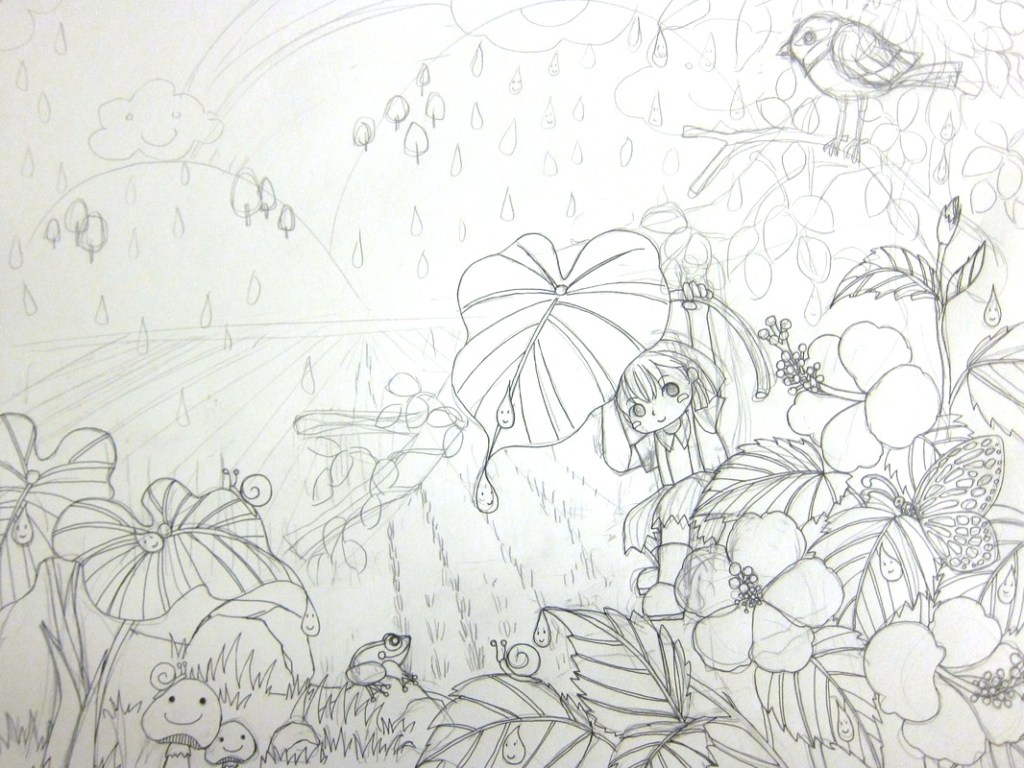
In the quiet corners of a memory’s chest,
Lies the fragile heart of childhood’s rest,
Where once we danced in fields of endless green,
And whispered dreams in a world serene.
The days were long, and skies were wide and blue,
Each sunrise painted in a brighter hue,
Yet time was gentle, and the hours were slow,
As innocence unfurled its tender glow.
The laughter that echoed through the open air,
The warmth of a mother’s gentle care,
The nights spent under blankets of pure light,
Where every shadow turned to dreams so bright.
Now, those moments drift like autumn leaves,
In the quiet space where the heart believes,
The echoes of a playground’s distant song,
Remind us of where our souls belong.
The world has grown, and time has moved away,
But in our hearts, that child still wants to play,
We clutch the fragments of those golden days,
A bittersweet remembrance in life’s maze.
For childhood’s light, though it may softly fade,
Lives on in memories we’ve gently laid,
A testament to days we can’t retrieve,
Yet hold within our hearts, forever grieve.
Excerpt From
Peace and Harmony
Sandesh Ghimire
This material may be protected by copyright.
SAFETY AT A CONSTRUCTION SITE

Safety at a construction site means making sure that everyone is protected from accidents and injuries. This includes following rules and guidelines, using the right equipment, and being aware of potential hazards. It’s important to always be careful and take precautions to avoid any harm.
The construction industry in Nepal is growing a lot. Many people don’t realize that there are more and more accidents and illnesses happening in the construction industry. Construction sites have a lot of accidents every day.
Safety is a rule that must be followed. All construction workers must make sure their workers are safe by law and by being responsible. Keeping people safe at construction sites involves more than just giving them protective gear. As a builder, you need to know about the different dangers to your health and safety at the construction site. To find out what could be dangerous for your health and safety, you need to do a Hazard Identification and Risk Assessment (HIRA) process. Here are some important things you need to do to make sure your construction site is safe.
First, you need to control who can enter the construction site. Leaving the construction site open can lead to people coming in who shouldn’t be there and taking things that don’t belong to them, like tools and equipment. Access control makes things more secure and helps keep track of how many workers are at the site. It’s important to keep track of the employees in case there’s an accident. Access control helps to stop workers and construction equipment from bumping into each other on the site. Depending on how the construction is being done, you can control who can get in by putting a strong fence around the construction site using materials like iron sheets. Sometimes, you can just use barricade tapes. In any situation, the important thing is to manage the traffic at the construction site by controlling who can come in.
Secondly, make sure all workers, even those who are not permanent, have the right protective gear. Every worker should be safe at work, no matter how much they get paid, what job they have, or how long they’ve been working. You need to wear the right safety gear, even for a short job. It is important to always have safety protection, no matter how quickly a task needs to be done. Keep the workers safe. Make sure that the protective equipment is right for the job and enough to keep you safe.
Most contractors only give workers work suits, safety boots, and helmets. Workers at the construction site need more protection like ear protection and masks to avoid breathing in dust, especially cement powder, which can harm their health. Additionally, many construction workers do not follow the rule of wearing protective gear. Contractors need to give the right gear and make sure it’s worn the right way.
PPE helps to keep workers safe and also has other advantages. PPE helps employees feel more confident and happy. Employees feel good and appreciated when they are provided with protective gear. Even regular people trust workers more when they wear protective gear compared to those who don’t. Actually, a person wearing protective gear can easily get a loan because the gear is enough security for the loan. Self-employed workers who wear PPE, like bricklayers, are more respected than those who do not wear PPE.
Third, make sure workers have things like bathrooms, places to eat, first-aid kits, water to drink, and maybe even food. Roads are being built in the wilderness, far from places where sick or injured people can get medical help. So, it is important to have First Aid supplies at a construction site to help with any injuries or illnesses that might happen. Accidents can happen at any time. Get readyAccidents can cause injuries without warning. At construction sites, workers might unintentionally step on a nail or piece of metal. They might also get bitten by snakes or insects. Employees may have various injuries that need immediate help to save their lives. Make sure your building site has first aid kits and that the workers know how to use them.
Fourth, make sure to hire a safety officer or choose a safety representative. As a contractor, you often hire temporary workers from the nearby area because your job involves working on different projects. These people don’t know much about staying safe. If there is no safety specialist at the site, accidents will probably happen. It’s really important to have someone in charge of safety at the workplace. They make sure everyone follows safety rules, they talk to workers about staying safe, and they check for any risks or hazards.
Finally, don’t forget to give fire safety equipment. A lot of things that can catch on fire, like diesel, petrol, and gas, are kept and used at places where construction is happening, like roads. Make sure you have fire extinguishers to keep everyone safe from fires. Set up a plan to deal with emergencies like a fire or a chemical spill.
We like the big buildings being built in the country. But building infrastructure shouldn’t harm people’s lives. Make sure that workers are safe and don’t get hurt or die. Safety at construction sites is not good in our country. Many contractors don’t follow our safety laws and put workers in dangerous situations. Try being a unique contractor. Take care and make sure everyone is safe at the construction site. Keeping people safe involves more than just giving them protective gear. Build things, but be safe.
A keen talk with IT heads
Dr M A Narsimha Murthy- Senior Director-Quality Management, Infineon Technology
Mr Somasundharam N- Managing Director, Finixel Technologies Pvt. Ltd
Some days back I was in an event related to Business and startup ideas. I was the MC of the event and I had an opportunity to talk with two veterans from the tech and IT industry ie. Dr M A Narsimha Murthy- Senior Director-Quality Management, Infineon Technology and Mr Somasundharam N- Managing Director, Finixel Technologies Pvt. Ltd. I was in conversation with these old fellows on topics of the youths and their active participation in the business. Everyone has their own view and perception of things. During the conversation, they were reasoning their views about How the old education system and old text and sources were better. They further talked about the semester system in various certificate levels of education is killing the purity of foundational core values of a particular discipline.
Their sceptical talk interested me as well and I gave some input to their thoughts as well. I presumably think that the generation today is much more adaptive to the changing air of the economic System. The youths are more capable and productive than their predecessors. The new tech era is changing in the blink of an eye as compared to the industrial era.
Competition is so high today that the corporate system itself is teaching youths to be selfish and self-centred. But it does not mean losing hope in the youths. They have an extraordinary capacity to work out solutions to particular problems individually. But I also see a problem with them mingling in a team and leading teamwork. This problem is faced due to their tech surrounded environment.
Industry 4.0

Industry 4.0 refers to the fourth industrial revolution, although it is concerned with areas that are not usually classified as industrial applications in their own right, such as smart cities.
Fourth Industrial Revolution
The first industrial revolution came with the advent of mechanisation, steam power and water power.
This was followed by the second industrial revolution, which revolved around mass production and assembly lines using electricity.
The third industrial revolution came with electronics, I.T. systems and automation, which led to the fourth industrial revolution that is associated with cyber-physical systems.
Industry 4.0 Technologies
Generally speaking, Industry 4.0 describes the growing trend towards automation and data exchange in technology and processes within the manufacturing industry, including:
- The internet of things (IoT)
- The industrial internet of things (IIoT)
- Cyber-physical systems (CPS)
- Smart manufacture
- Smart factories
- Cloud computing
- Cognitive computing
- Artificial intelligence
This automation creates a manufacturing system whereby machines in factories are augmented with wireless connectivity and sensors to monitor and visualise an entire production process and make autonomous decisions.
Wireless connectivity and the augmentation of machines will be greatly advanced with the full rollout of 5G. This will provide faster response times, allowing for near real-time communication between systems.
The fourth industrial revolution also relates to digital twin technologies. These digital technologies can create virtual versions of real-world installations, processes and applications. These can then be robustly tested to make cost-effective decentralised decisions.
These virtual copies can then be created in the real world and linked, via the internet of things, allowing for cyber-physical systems to communicate and cooperate with each other and human staff to create a joined-up real-time data exchange and automation process for Industry 4.0 manufacturing.
This automation includes interconnectivity between processes, information transparency and technical assistance for decentralised decisions.
In short, this should allow for digital transformation. This will allow for automated and autonomous manufacturing with joined-up systems that can cooperate with each other.
The technology will help solve problems and track processes, while also increasing productivity.
Example of the Industry 4.0 Revolution
Industry 4.0 has already been demonstrated through business models such as offline programming and adaptive control for arc welding, taking the process from product design through simulation and onto the shop floor for production.
There are also examples of businesses implementing Industry 4.0 in automotive manufacturing and a variety of smart factories across the world.
The Future: Industry 5.0
Industry 5.0 is already being spoken about and involves robots and smart machines allowing humans to work better and smarter.
Industry 5.0 will make the factory a place where creative people can come and work, to create a more personalised and human experience for workers and their customers.
By connecting the way in which man and machine work together, estimates say that Industry 5.0 will mean that over 60% of manufacturing, logistics and supply chains, agri-farming, and the mining and oil and gas sectors will employ chief robotics officers by 2025.
Galaxies

I see a cluster of matters
Far in the imagination
Filled with some pretty colours
Scattered in the universe
hundreds of billions of stars,
enough gas and dust
to make billions of more stars,
and at least ten times
as much dark matter
As all the stars and gas put together
all held together by a force
Known and unknown to us
 Sandesh Ghimire